Hillary Weiss, Ph.D.
Curriculum Development
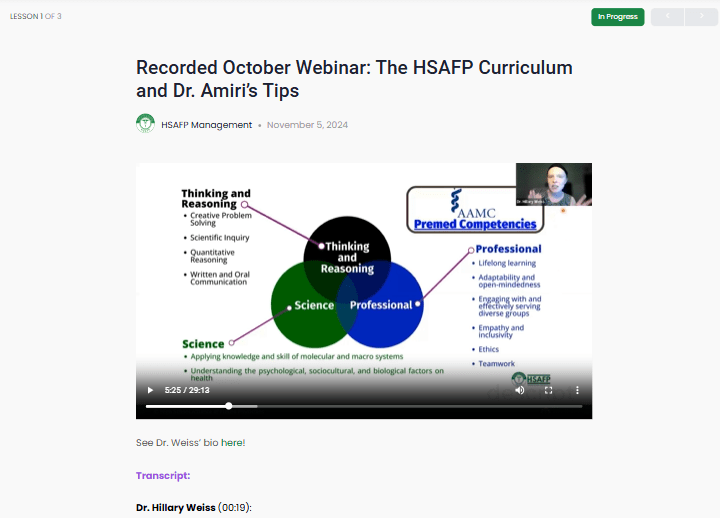
Picture Above: I moderated a 2024 HSAFP webinar and presented the AAMC Premed Competencies infographic that guides the HSAFP curriculum.
In my current role as a curriculum developer for the High School Alliance of Future Physicians (HSAFP):
- I implement the 17 AAMC Premed Competencies in monthly hands-on and virtual curriculum for high school students interested in being a physician and/or the healthcare field.
- I work collaboratively with our organizational partners, physicians, nurses, PAs, EMTs, and to provide up-to-date, accurate, accessible, and fun curriculum for students!
Timeline of Curriculum Development
Now: Developing monthly curriculum for HSAFP
2023–2024: Course development for Academic Writing courses (AWR 101 and AWR 201)
2022: Texas Medical & Dental Schools Application Service (TMDSAS) Primary Application Guide (for MedSchoolCoach)
2018–2021: Developed one-hour English tutoring lessons for students ages 9 and older
2016–2019: Collaborative writing course development with the WSU Basic Writing Task Force to retain first-year university students of colour
📔Storyboard Template
Drawing on my experience, as well as ADDIE and Gagne’s 9 Events of Instruction, I have created this storyboard template to use with subject matter experts and others. I also find this Session Lab Standard Storyboard helpful as well!
LearnDash LMS and WordPress
As the Program Development Coordinator for the High School Alliance of Future Physicians, I create monthly lessons and activities collaboratively with medical admissions and healthcare experts.
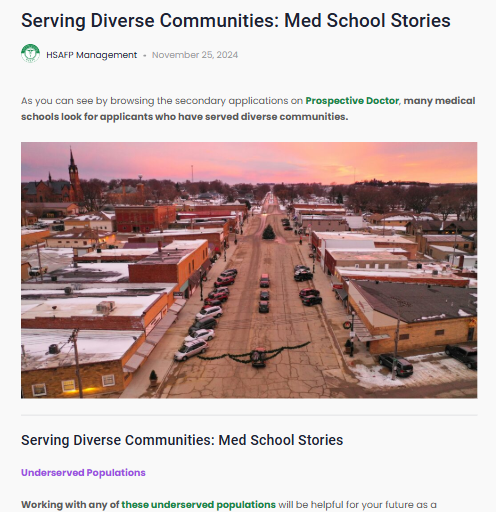
For example, in 2024, I wrote and designed HSAFP’s December 2024: Non-Clinical Volunteering course. In this lesson, I used the following skills:
- Thorough planning and writing of tasks to delegate to Chapter Officers
- Research on different medical schools, extracurriculars, and diversity and inclusion in medical schools
- Accessible curriculum design
Articulate Storyline 360
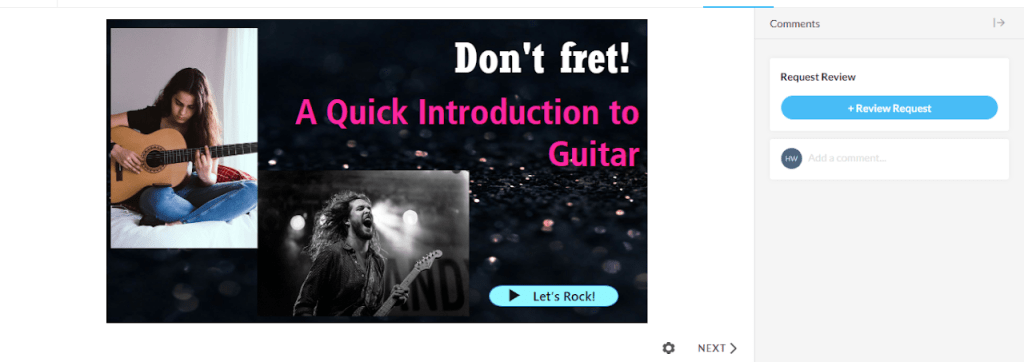
This brief course, “Don’t Fret: A Quick Introduction to Guitar,” is a “Choose Your Adventure” type course that uses accessible animations, design, images, language, and navigation. It also includes a short quiz!
I have also completed some short Articulate Rise 360 Projects that I do not have access to, but LearnDash, which I use as a current curriculum developer, has similarities.
🎨Canva
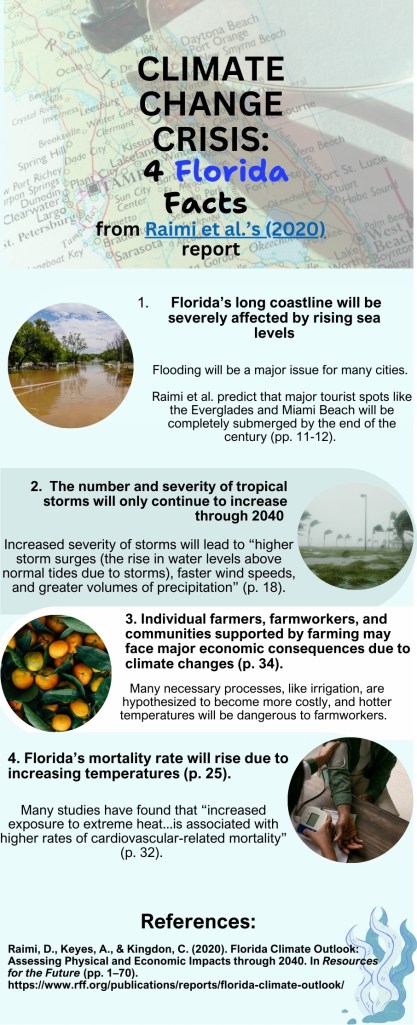
I have used Canva for many projects while teaching English courses to university students, including documents, posters, resumes, and infographics and as a curriculum developer for HSAFP.
This infographic shows my skills in APA citation, summarizing scientific research, and choosing effective visuals to show the detrimental effects of climate change, according to Raimi et al.’s (2020) report about Florida in particular.
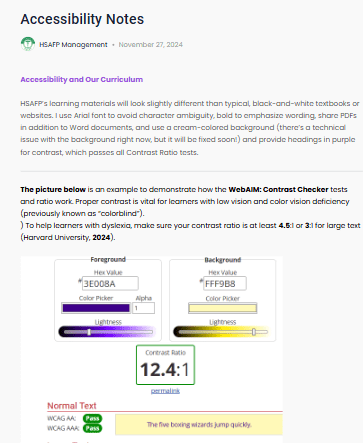
In all of my infographics and documents, I use alt-text for images, the WebAIM: Contrast Checker, and the Dyslexia Friendly Style Guide to ensure they are accessible to all.
🗨️PowerPoint
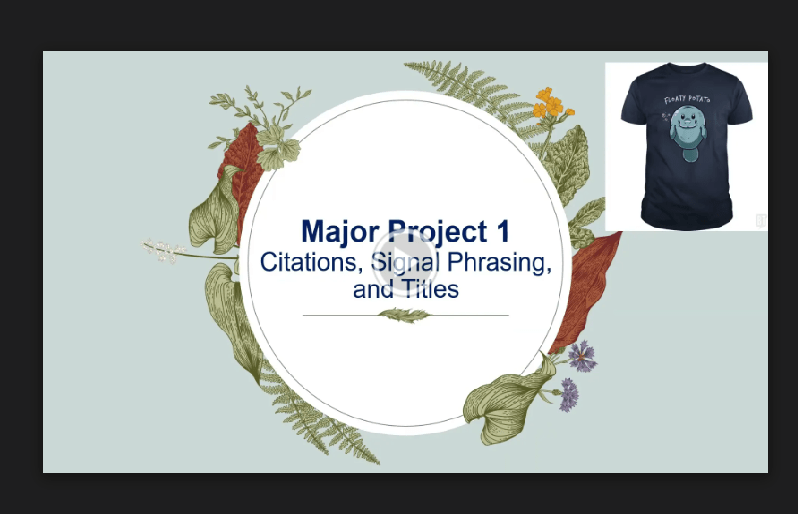
This is a 14-minute recorded video lesson, using PowerPoint, for my 2023 first-year writing students about properly using different citation styles, academic signal phrasing, and titles. I have also used Loom and Camtasia, in addition to PowerPoint, and I am confident that I can quickly and easily learn new software that best suits our goals.
🌠Other resources I use regularly:
- Elements of Indigenous Style: A Guide for Writing by and about Indigenous Peoples by Gregory Younging
- The Disability Language Style Guide
- The 519’s Glossary of Terms of equity, diversity, inclusion, and awareness
- “Storyline 360: How to Design an Accessible Course” from Articulate’s website
- GLAAD Media Reference Guide, 11th edition
 Dr. Hillary Weiss' Portfolio